
pdf padi open water diver manual
PADI Open Water Diver Manual: A Comprehensive Overview
PADI launched eLearning in 2007, offering remote theory completion and an electronic manual copy, available as a PDF for courses like Open Water Diver.
The manual, crucial for certification, exists in digital formats and paperback, with version 2.0 being a revised edition from 1994.
Accessing the PADI Open Water Diver Manual as a PDF provides convenience for travelers, eliminating the need to carry physical books during adventures.
PADI’s Open Water Diver course represents the globally recognized entry point into scuba diving, and the associated manual is fundamental to its successful completion. Increasingly, divers are opting for the convenience of the PDF version of the manual, readily accessible through PADI eLearning and other online platforms.
This course equips individuals with the knowledge and skills to safely explore the underwater world, and the manual serves as the primary resource for theoretical understanding. The digital format allows students to study at their own pace, anytime and anywhere, a significant advantage over traditional methods.
The PADI Open Water Diver Manual, whether in PDF or physical form, details essential concepts, from dive physics and physiology to equipment operation and emergency procedures. The eLearning service provides an integrated experience, combining theory with the PDF manual for a comprehensive learning journey.
Having a readily available PDF copy, like those stored in Dropbox, proves invaluable for divers on the go, ensuring access to crucial information during travel and preparation.
The Importance of the Manual
The PADI Open Water Diver Manual, in any format – including the increasingly popular PDF version – is absolutely critical for diver safety and comprehension. It’s not merely a supplementary resource; it’s the foundational text for understanding the principles of scuba diving.
The manual meticulously covers essential topics like dive physics, potential physiological effects, and proper equipment usage, ensuring divers are well-prepared for underwater experiences. Accessing the manual as a PDF offers unparalleled convenience, allowing for study during travel or in remote locations.
PADI’s commitment to accessible learning is evident in the eLearning service, which integrates the PDF manual seamlessly into the course curriculum. This ensures students have constant access to vital information throughout their training.
Possessing a PDF copy, as many divers now do, provides a readily available reference point long after certification, reinforcing safe diving practices and knowledge retention.
Manual Content and Structure
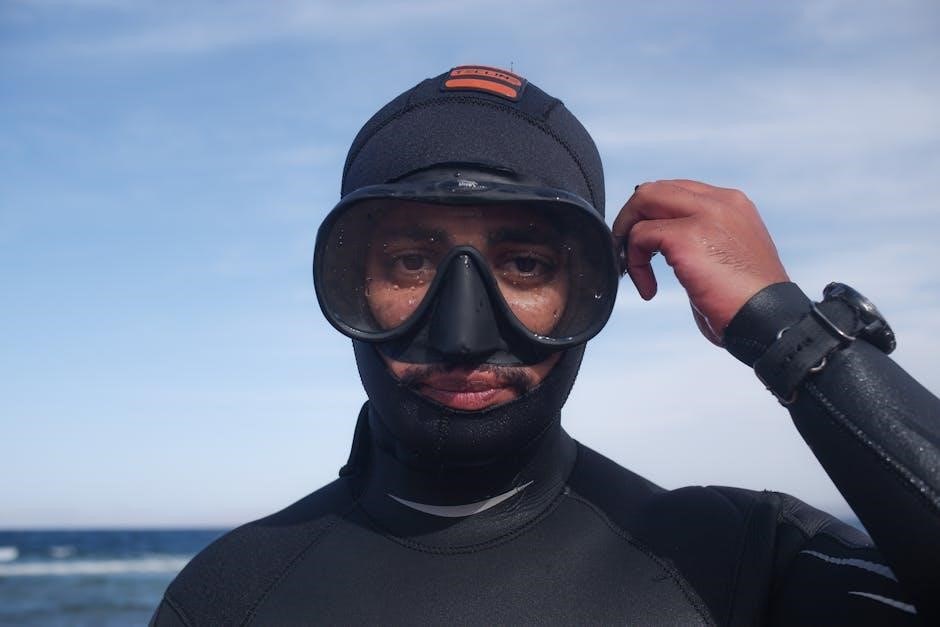
PADI manuals, including the PDF version, detail course prerequisites, structure, and effective study techniques, ensuring a comprehensive learning experience for all divers.
Course Prerequisites and Requirements
PADI Open Water Diver course prerequisites are generally straightforward, focusing on basic swimming skills and a reasonable level of physical health. While the PDF manual doesn’t explicitly list stringent requirements, it implicitly assumes candidates can comfortably swim and tread water.
Typically, prospective divers need to be at least 10 years old, and those under 18 require parental or guardian consent. A medical questionnaire is standard, and individuals with certain medical conditions may need physician approval to participate.
The manual emphasizes understanding the course structure and successfully completing all knowledge reviews, practical application exercises, and final exams. The PDF format facilitates easy access to this crucial information, aiding in preparation and comprehension of these essential prerequisites.
PADI Open Water Diver Course Structure
The PADI Open Water Diver course, detailed within the manual – available as a convenient PDF – is structured around three primary components: Knowledge Development, Confined Water Dives, and Open Water Dives.
Knowledge Development covers dive physics, physiology, equipment, and safe diving practices. Utilizing the PDF manual, students complete knowledge reviews and a final exam to demonstrate comprehension. Confined Water Dives, typically in a pool, introduce fundamental skills like mask clearing and regulator recovery.
Finally, Open Water Dives, conducted in a real-world dive environment, allow students to apply learned skills under the supervision of a PADI Instructor. The manual’s structure mirrors this progression, ensuring a logical and effective learning experience, easily accessible through the digital PDF version.
How to Effectively Use the Manual
To maximize learning, actively engage with the PADI Open Water Diver Manual, whether in PDF or physical format. Begin by thoroughly reading each chapter, highlighting key concepts and terms. Utilize the knowledge review questions at the end of each section to self-assess understanding.
The PDF version allows for convenient searching and note-taking. Don’t hesitate to revisit sections as needed. Supplement manual study with PADI’s eLearning resources, which complement the manual’s content.
Practice skills visualization, imagining yourself performing them underwater. Discuss challenging concepts with your instructor or fellow students. Remember, the manual is a tool – effective use leads to confident and safe diving!

Digital Access and eLearning
PADI’s eLearning service provides a modern approach, including a digital manual copy – often a PDF – for remote theory completion and convenience.
PADI eLearning Service: A Modern Approach
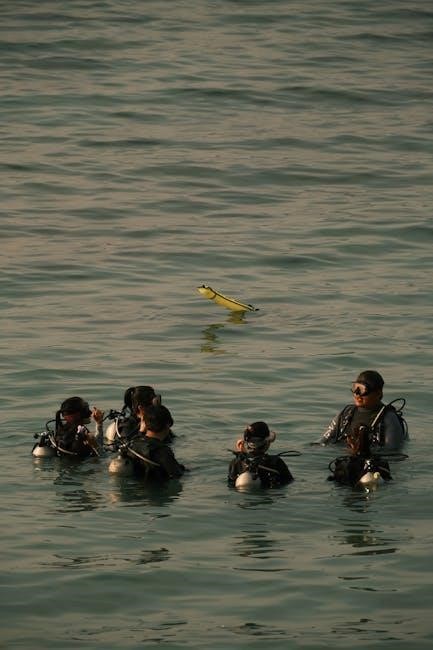
PADI’s eLearning platform represents a significant shift in diver education, offering a flexible and convenient alternative to traditional classroom learning. Introduced in 2007, this service allows students to complete the theoretical portion of courses, including the Open Water Diver course, remotely, at their own pace.
A key component of the eLearning experience is access to a digital version of the PADI Open Water Diver Manual, frequently provided as a PDF document. This eliminates the need for students to purchase and carry a physical textbook, making it particularly appealing for travelers. The digital format allows for easy access on various devices, such as laptops, tablets, and smartphones.
Furthermore, the eLearning service often includes interactive elements, quizzes, and progress tracking features, enhancing the learning experience and ensuring comprehension of the material. This modern approach caters to diverse learning styles and schedules, making scuba diving education more accessible than ever before.
Benefits of the Digital Manual (PDF)

The PDF version of the PADI Open Water Diver Manual offers numerous advantages over its physical counterpart. Primarily, it enhances portability, allowing divers to access crucial information anytime, anywhere, without the burden of carrying a bulky book – a boon for those traveling to dive sites.
Digital manuals facilitate easy searching for specific topics, streamlining study and quick reference during course review. Features like zoom functionality improve readability on smaller screens, and the ability to highlight and annotate directly within the PDF aids in focused learning.
Moreover, the PADI eLearning service provides an environmentally friendly alternative to paper manuals, reducing waste. Having a digital copy ensures access to the latest version, as updates are easily distributed, keeping divers informed with current best practices and safety procedures.
Accessing the Manual Through Online Platforms
PADI’s primary online platform for accessing the digital Open Water Diver Manual is through the PADI eLearning service. Upon enrollment in the online course, students gain immediate access to the manual as part of their course materials, typically in a PDF format.
This integrated approach allows for seamless learning, combining interactive lessons with the comprehensive reference material of the manual. Divers can also find resources and potentially purchase digital versions through the official PADI website and authorized retailers.
While unofficial sources may offer PDF copies, PADI strongly recommends utilizing the official eLearning platform to ensure access to the most current and accurate information, supporting a safe and effective learning experience. Dropbox is also a handy place to store it.

Key Sections of the Manual
PADI’s manual covers essential topics like dive physics, physiology, equipment function, and maintenance, providing a foundational understanding for safe diving practices.
Understanding Dive Physics
Dive physics, a core component of the PADI Open Water Diver Manual, explains how pressure changes affect divers and their equipment underwater. The PDF version meticulously details concepts like Boyle’s Law, relating pressure and volume, crucial for understanding air expansion and contraction during ascents and descents.
Furthermore, the manual clarifies Dalton’s Law, explaining partial pressures of gases in the breathing mixture, impacting nitrogen narcosis and oxygen toxicity. Archimedes’ Principle, concerning buoyancy, is also thoroughly covered, enabling divers to master neutral buoyancy control.
Understanding these principles, readily available within the digital manual, is paramount for safe and enjoyable diving, preventing potential issues related to pressure, gas behavior, and buoyancy management. The PADI course emphasizes practical application of these concepts.
Dive Physiology and Potential Risks
The PADI Open Water Diver Manual, including the PDF version, dedicates significant attention to dive physiology – how the human body reacts to the underwater environment. It details physiological changes occurring with pressure, such as the effects on ears and sinuses during equalization, vital for preventing barotrauma.
Crucially, the manual outlines potential risks like decompression sickness (DCS), caused by nitrogen bubbles forming in tissues, and nitrogen narcosis, impacting mental clarity. It explains preventative measures, including ascent rates and depth limits.
Furthermore, the PADI manual addresses oxygen toxicity and the importance of proper gas mixtures. Understanding these risks, comprehensively explained in the digital format, is essential for responsible diving and safe underwater exploration.
Dive Equipment: Function and Maintenance
The PADI Open Water Diver Manual, readily available as a PDF, provides detailed explanations of essential dive equipment. It covers the function of regulators, buoyancy control devices (BCDs), dive computers, and wetsuits or drysuits, emphasizing how each component contributes to a safe and enjoyable dive.
Beyond functionality, the manual stresses the importance of proper equipment maintenance. This includes rinsing and storing gear correctly to prevent corrosion and damage, alongside regular servicing by qualified technicians.
The digital format allows for easy reference to diagrams and illustrations, aiding in understanding equipment assembly and pre-dive checks. Mastering equipment knowledge, as outlined in the PADI manual, is fundamental for diver safety and confidence.
Essential Diving Skills Covered
PADI’s manual, including the PDF version, details crucial skills like buoyancy control, underwater communication, and emergency procedures for confident diving.
Buoyancy Control Techniques
PADI’s Open Water Diver Manual, whether in PDF or physical form, dedicates significant attention to mastering buoyancy control, a cornerstone of safe and enjoyable diving.
The manual explains the principles of buoyancy, detailing how divers achieve neutral buoyancy through proper weighting, breathing, and body positioning.
It emphasizes the importance of minimizing finning effort and avoiding contact with the seabed or surface, preserving the marine environment and maximizing air consumption.
Divers learn techniques for fine-tuning buoyancy throughout a dive, adapting to changing depths and conditions, ensuring a relaxed and controlled underwater experience.
The PDF version allows convenient review of these techniques, reinforcing practical skills learned during training dives, and promoting responsible diving practices.
Underwater Communication Methods

The PADI Open Water Diver Manual, accessible as a PDF or in print, thoroughly covers essential underwater communication methods for diver safety and enjoyment.
It details a range of standardized hand signals, enabling divers to convey information about air status, equipment issues, navigation, and marine life observations.
The manual stresses the importance of clear and concise signaling, ensuring effective communication even in low visibility or noisy environments.
Divers learn to recognize and respond to common signals, fostering teamwork and situational awareness during dives.
Having the manual in PDF format allows for quick reference and practice of these vital signals, enhancing confidence and preparedness for underwater interactions.
Emergency Procedures and Problem Solving
The PADI Open Water Diver Manual, readily available as a PDF, dedicates significant attention to emergency procedures and effective problem-solving techniques underwater.
It outlines critical skills like out-of-air responses, buddy breathing, controlled emergency ascents, and managing equipment malfunctions.
Divers learn to recognize potential problems, assess risks, and implement appropriate solutions calmly and efficiently.
The manual emphasizes the importance of pre-dive planning, including discussing emergency scenarios with your buddy.
Accessing this information via a PDF allows divers to review and rehearse these crucial procedures, building confidence and preparedness for unexpected situations during dives.

Manual Revisions and Editions
PADI manuals undergo revisions; version 2.0, a 1994 update, is noted, while the PDF format facilitates easy access to the latest editions.
Identifying Different Versions of the Manual
Determining the specific version of your PADI Open Water Diver Manual is crucial, as content evolves with updated safety standards and teaching methodologies. The Internet Archive references a revised edition dating back to 1994, specifically designated as product number 79180, version 2.0.
However, with the advent of digital access and PADI’s eLearning platform, identifying the manual version becomes slightly more complex. PDF versions accessed through eLearning are typically the most current, automatically updated with each course enrollment.
Physical copies will often display the version number on the title page verso (the back of the title page). Look for explicit version numbers or publication dates to differentiate between editions. Older manuals may lack these identifiers, requiring comparison with current PADI standards to ensure accuracy and relevance.
Changes and Updates Over Time (e.g., Version 2.0)
PADI Open Water Diver Manual revisions reflect advancements in diving technology, physiology, and safety protocols. Version 2.0, identified as a significant update from the 1994 edition, likely incorporated changes based on research and incident analysis conducted during that period.
The shift towards digital delivery via PDF and PADI eLearning has accelerated the update cycle. Unlike printed manuals, eLearning materials can be revised frequently, ensuring students access the most current information. Updates address evolving best practices, equipment modifications, and refined emergency procedures.
These changes extend beyond textual edits; PADI frequently enhances illustrations and incorporates multimedia elements within the PDF manual to improve comprehension. Staying current with the latest version is vital for safe and effective diving practices.

Language Availability
PADI offers the Open Water Diver Manual in multiple languages, including a dedicated Spanish version (“Manual de Bucear PADI Open Water, Espanol”) as a PDF.
Additional translated versions cater to a global audience, supporting divers worldwide in their native languages during eLearning.
PADI Open Water Diver Manual in Spanish
PADI recognizes the importance of accessibility for a diverse global community, and therefore provides a fully translated Open Water Diver Manual in Spanish.
This version, known as “Manual de Bucear PADI Open Water, Espanol,” ensures that Spanish-speaking students can comfortably and effectively learn the fundamentals of scuba diving.
The Spanish manual covers all the same essential topics as the English version, including dive physics, physiology, equipment, skills, and safety procedures, maintaining the same high standards of PADI instruction.
Divers can often find this manual available as a PDF download through various online platforms, complementing the PADI eLearning service and offering a convenient study option.
Having the manual in their native language significantly enhances comprehension and confidence for Spanish-speaking divers embarking on their underwater journey.
Other Translated Versions
PADI extends its commitment to global accessibility beyond Spanish, offering translated versions of the Open Water Diver Manual in numerous other languages to cater to a worldwide student base.
While specific language availability may vary, PADI strives to provide learning materials in commonly spoken languages, ensuring divers can learn in their preferred tongue.
These translations maintain the core curriculum and safety standards of the original English manual, delivering consistent, high-quality instruction regardless of language.
Access to these translated manuals, including potential PDF formats, is often facilitated through authorized PADI dive centers and the PADI eLearning platform.
Divers interested in a specific language version should check the PADI website or contact a local PADI center to confirm availability and access options.

Resources and Supplementary Materials
PADI’s website offers support, while the Rescue Diver Manual provides related information; eLearning includes a digital manual PDF for convenient access;
PADI Website and Support
PADI’s official website serves as a central hub for divers seeking information and resources related to their courses, including the Open Water Diver program. It provides direct access to course details, certification standards, and frequently asked questions, assisting students throughout their learning journey.
For those utilizing the digital PDF manual through PADI eLearning, the website offers technical support to address any access or functionality issues. Divers can find troubleshooting guides and contact PADI customer service for personalized assistance if needed.
Furthermore, the website hosts a vibrant online community forum where students can connect with instructors and fellow divers, exchanging tips and experiences related to the manual and practical training. This collaborative environment enhances the learning process and fosters a sense of camaraderie among PADI members.
Related Rescue Diver Manual Information
PADI’s course progression naturally leads from Open Water Diver to more advanced certifications, notably the Rescue Diver course. While focusing on the Open Water Diver Manual, it’s beneficial to acknowledge the subsequent learning materials.
The PADI Rescue Diver Manual builds upon the foundational knowledge gained in the initial course, introducing complex problem-solving skills and emergency response techniques. Like the Open Water manual, it’s available through PADI eLearning, offering a convenient PDF format for digital access.
Students transitioning to the Rescue Diver course will find that a solid understanding of the principles outlined in the Open Water manual is crucial. Both manuals emphasize safety, responsible diving practices, and a commitment to diver well-being, creating a cohesive learning experience.
Additional Learning Resources
Beyond the core PADI Open Water Diver Manual, numerous supplementary resources enhance the learning experience. The official PADI website (PADI.com) serves as a central hub for information, course details, and support materials, often including downloadable resources.
Online platforms and forums, such as the r/scuba subreddit on Reddit, provide opportunities for peer-to-peer learning and discussion. Divers frequently share tips, experiences, and even links to helpful resources, including discussions about obtaining PDF versions of manuals.
Furthermore, exploring related materials like water and flood rescue manuals (as referenced from rescue3instructors.com) can broaden understanding of safety protocols. Remember to prioritize official PADI resources for accurate and up-to-date information regarding certification requirements.
Leave a Reply
You must be logged in to post a comment.